
There are people in this business whose names will never trend, never get the spotlight, never end up on a corporate panel, but the industry does not move without them. They are the ones who keep things running while everyone else is smiling for photos.
For me, one of those people was Maye James.
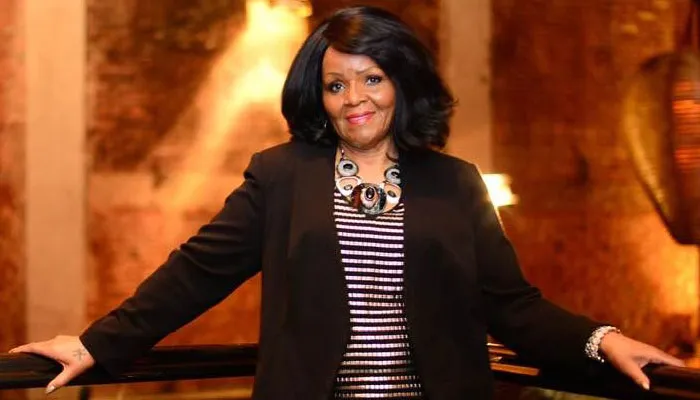
I met Maye through Daisy Davis several years ago. Daisy made the introduction and from that point on, Maye and I stayed in touch through phone calls and emails. Nothing formal. No scheduling links. No long exchanges. Just two industry people who understood each other without having to explain anything.
Advertisement
She had a way of talking about her early days in Black radio that reminded me why I do what I do. Maye was not interested in being a star. She was the wiring behind the spotlight.
The first time I really sat down to talk to Maye, I called her late. She answered sounding tired, but her mind was clear. Once she started talking, the details came out with precision. Names. Stations. People. Situations that had been misunderstood or rewritten over the years. She clarified and gave the actual details. That was Maye.
We started off talking about a funeral. A small service with about twenty people, mostly church members. Then she mentioned all the people who claimed they loved Frankie Crocker, who talked loud when he was alive and disappeared towards the end of his career and when it was time to show up for his mother.
She said people were full of it. She didn’t sound bitter. She sounded like someone who had seen the same pattern repeat for decades and refused to pretend otherwise.
There is something I deeply appreciate about Black stories told by Black people. It is the nuance that sits between the lines and the cultural details that never need explaining because the person telling the story actually lived it. Maye had that. She could talk about the 60s like I was right behind her walking into those New York clubs, and she would turn to the man at the door and say, “Oh, he’s with me baby,” pointing back at me while she was putting her ID back in her purse at the same time.
She would talk about getting a call from Frankie late at night. She did not want to go out but she went because he asked. Then she would describe stepping into those clubs with smoke in the air, the smell of liquor, the music from the 60s and 70s floating through the room, small round tables with a dozen conversations happening at once. It felt like she brought the entire era into the room with her when she talked. She was an amazing storyteller.
I have always loved Black history in all its forms. Knowing I am a descendant of Harriet Tubman is something I have rarely talked about, but started taking more seriously in the last few years. Music has been the love of my life from the beginning, so hearing these stories from the people who actually lived them hits differently. Maye was one of those people.
A lot of people talk about impact. Maye had it. Long before the club culture and record pool era took shape, she started her career working for Scepter Records, a label founded in 1959 by Florence Greenberg, a white housewife from New Jersey who built a powerhouse operation. Scepter was the home of Dionne Warwick’s first hits, and Maye was inside the building while that history was forming. She witnessed how a label grew, how records broke, and how the business actually functioned behind the curtains. That experience shaped everything she later brought to radio and the streets.
When the industry evolved, she evolved with it. She connected programmers, mixers, street DJs and label executives with a level of clarity and purpose people now try to replicate with technology. She didn’t need anyone to validate her. She already knew her value.
At WBLS, the public saw Frankie Crocker. They saw the voice, the performance, the energy. But behind every on air genius is someone holding the system together. Frankie would walk into the station with an idea that sounded impossible. He wanted a specific version of a record or some piece of information nobody had on hand. His response was always the same.
“Call Maye. She can find anything.”
If the library did not have it, she knew who did. If the information was missing, she knew which number to dial. She took what could have been chaos and turned it into a functioning operation. That is the part of the industry most people never see. The voices get the attention. The people behind the scenes keep the machine from falling apart.
She was also protective of elders. She told me about Frankie Crocker’s mother, Mother Crocker, and how poorly she was treated after he died. No will. Relatives stripping everything they could. Cars gone. Money gone. It was not gossip to Maye. It hurt her. She checked on her. She visited. She stayed involved. She wanted to make sure the woman was not abandoned by people who suddenly had nothing left to gain.
What struck me most was that Maye blamed herself for not catching certain things sooner. She carried responsibility for damage she did not cause. That is who she was. Her heart stayed open even when people took advantage of that openness.
I have always been adamant about making sure our stories are told correctly. Not edited to make them more palatable. Not culturally removed by people who were not there. Not enhanced by people who think they know but do not. That is why I respected Maye so much. She felt the same way. She understood how easily our history can be rewritten once the people who lived it are no longer here to correct the record.
For me, Maye was not just a voice from the past. She was a compass. Talking to her reminded me why I started Radio Facts and why I have protected it the way I have. She came from a generation of insiders who knew where the real decisions were made and how the culture actually moved. She wanted the truth documented without exploitation and without watering it down.
One thing I appreciated most is that she treated me like a peer. Not a stranger calling for information. Not someone who needed to be managed. She trusted me with the hard parts and expected me to hold them with care. In a business where people often reach out only when they want something, she gave freely. Stories. Context. The temperature of the room. The human side of the industry that never makes it into the official narrative.
Maye passed this week. And like many people from that era, there will probably not be a national headline or a corporate tribute. That does not mean she did not matter. The public knows the personalities. The industry knows the people who held it together.
When programmers like Frankie Crocker pushed the culture forward, Maye was the one tracking down the records, taking the calls, dealing with labels, smoothing out problems and keeping the system operational. When elders were treated poorly, she stepped in even when it broke her heart. When our history was at risk of being lost or rewritten, she sat down and made sure the story was captured correctly.
That matters more than people realize.
This is not just a tribute. This is THE record.
Maye James was one of the quiet architects of an era people still romanticize.
When you hear stories about New York radio and the power it had over a city, remember that there was a Black woman in the background making sure everything worked.
Her name was Maye James.
And she will NOT be forgotten.